The 26th GPHG awards were held on 7 November at the Bâtiment des Forces Motrices in Geneva. The official prize list now confirms 20 distinctions, including the Aiguille d’Or and the Special Jury Prize. [1,21]
The 2026 shortlist comprises 84 timepieces in 14 categories: 78 wristwatches and six clocks. The changed category structure matters. Essential and Complication replace the former gendered divisions, while Gemset gives stone-set watches a separate place alongside Jewellery. A collector can now consider a compact dress watch or an ambitious complication without first accepting a prescribed wearer. [2–4]
The editorial selections below are an independent reading of that shortlist, not predictions of jury votes. They deliberately include expensive handwork, practical industrial engineering and comparatively attainable watches. A shared movement can support a serious watch; an in-house label does not, by itself, establish superior finishing, reliability or value. Where manufacturing attribution matters, it is stated narrowly. These are research-based judgments, not claims of hands-on testing.
02 / GPHG SPECIAL
The official 2026 results
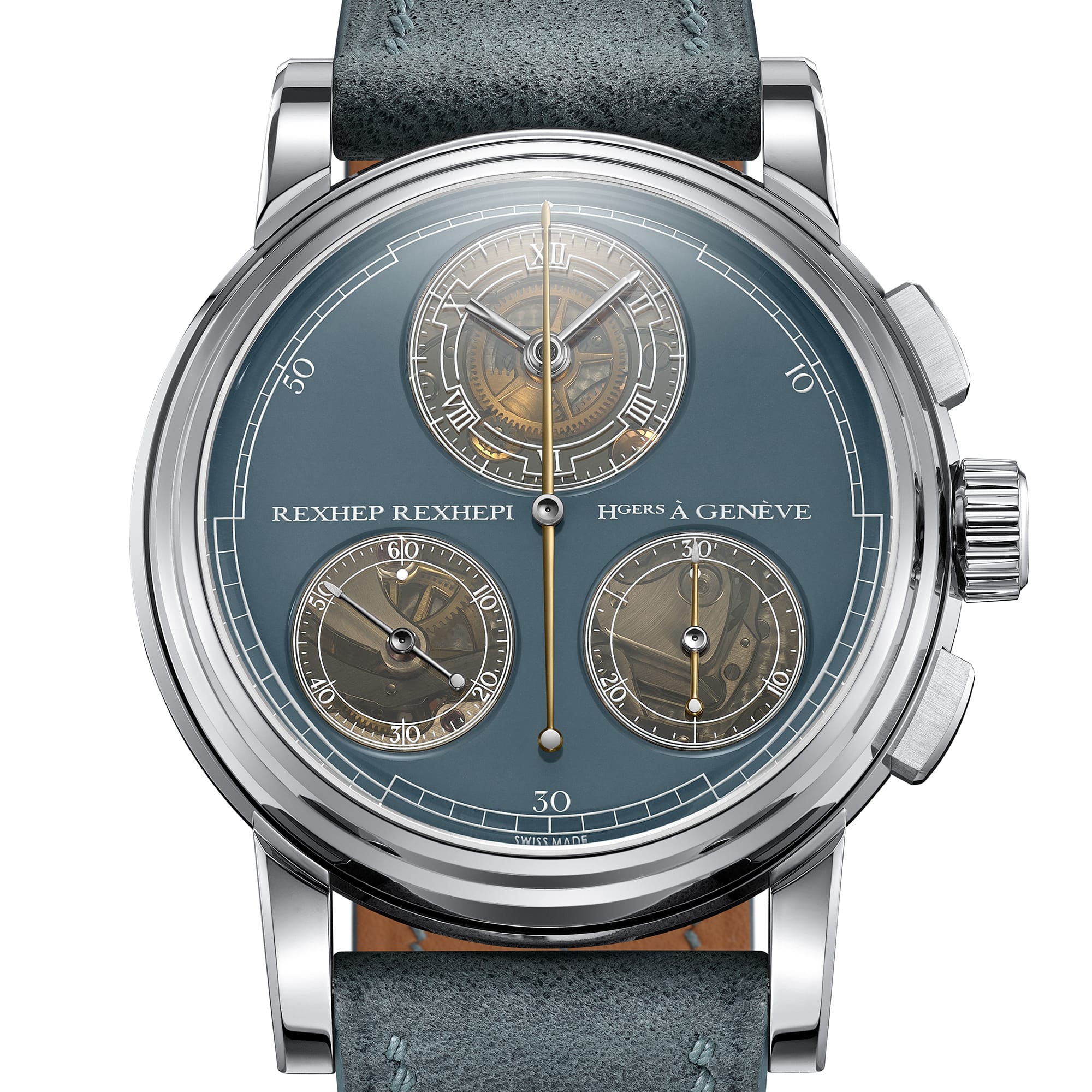
Rexhep Rexhepi’s Chronograph Flyback receives the Aiguille d’Or Grand Prix. The dedicated Chronograph Watch Prize goes to Parmigiani Fleurier’s Tonda PF Chronographe Mystérieux. They are separate awards: the highest distinction and the category prize should not be conflated.
The official GPHG prize list records the following 20 distinctions, independently corroborated by Monochrome and Watchonista. The other nominees are fellow finalists, not ranked runners-up. [21–23]
Aiguille d’Or Grand PrixRexhep Rexhepi — Chronograph Flyback.
Time OnlyChopard — L.U.C 1860.
EssentialDaniel Roth — Extra Plat Rose Gold Skeleton.
ComplicationCleguer — Inspiration One.
Mechanical ExceptionBlancpain — Grande Double Sonnerie.
ChronometryFerdinand Berthoud — Naissance d’une Montre 3.
Iconic WatchAudemars Piguet — Royal Oak “Jumbo” Extra-thin Selfwinding Flying Tourbillon Chronograph RD#5 “150th Anniversary”.
Special Jury PrizePatek Philippe — Watch Art Grand Exhibition.
03 / GPHG SPECIAL
Ten Escapement editorial awards
These are The Escapement’s own awards, chosen for the design, ingenuity and craft that speak to us as collectors. The official GPHG results appear in the preceding chapter.
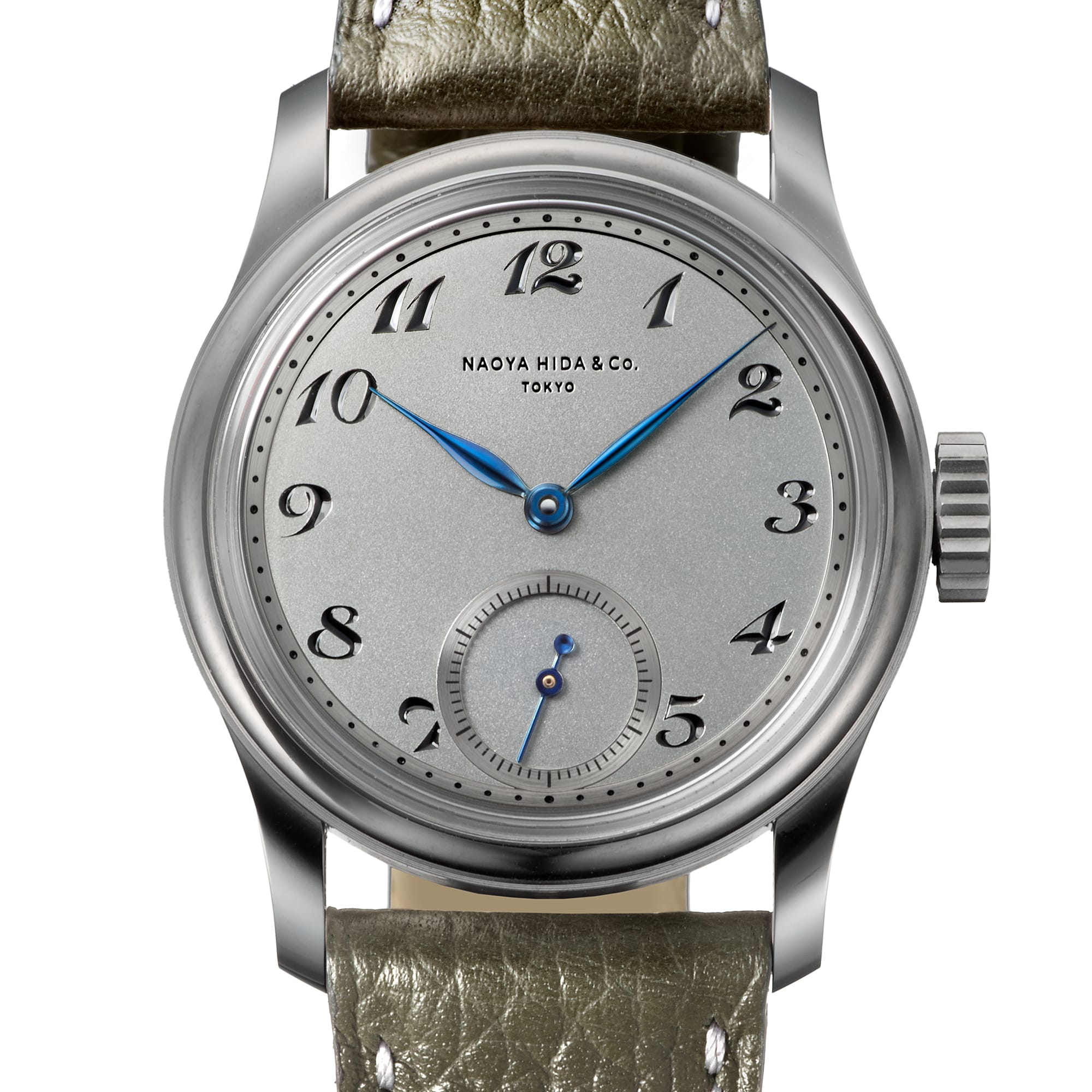
The Type8A earns this choice for proportion and disciplined detail. Its 31 mm steel case is unusually compact, but the argument is stronger than size alone: hand-engraved Arabic numerals on German silver and heat-blued steel hands make the restrained face a place to look closely. The manufacturer identifies both precision-machined dial details and handwork, a useful distinction rather than an invitation to call the entire dial handmade. [5]
The Chopard L.U.C 1860 is the stronger alternative for a collector who puts an established manufacture movement first. Parmigiani’s Toric Petite Seconde brings another quietly traditional approach. Hida takes this editorial award because its proportions and typography commit to a particularly clear point of view. The caveat is equally clear: 31 mm should be tried on, and the published specifications alone do not justify calling its movement wholly in-house.
THE ESCAPEMENT / EDITORIAL CHOICE 02
2 Best purpose built tool watch
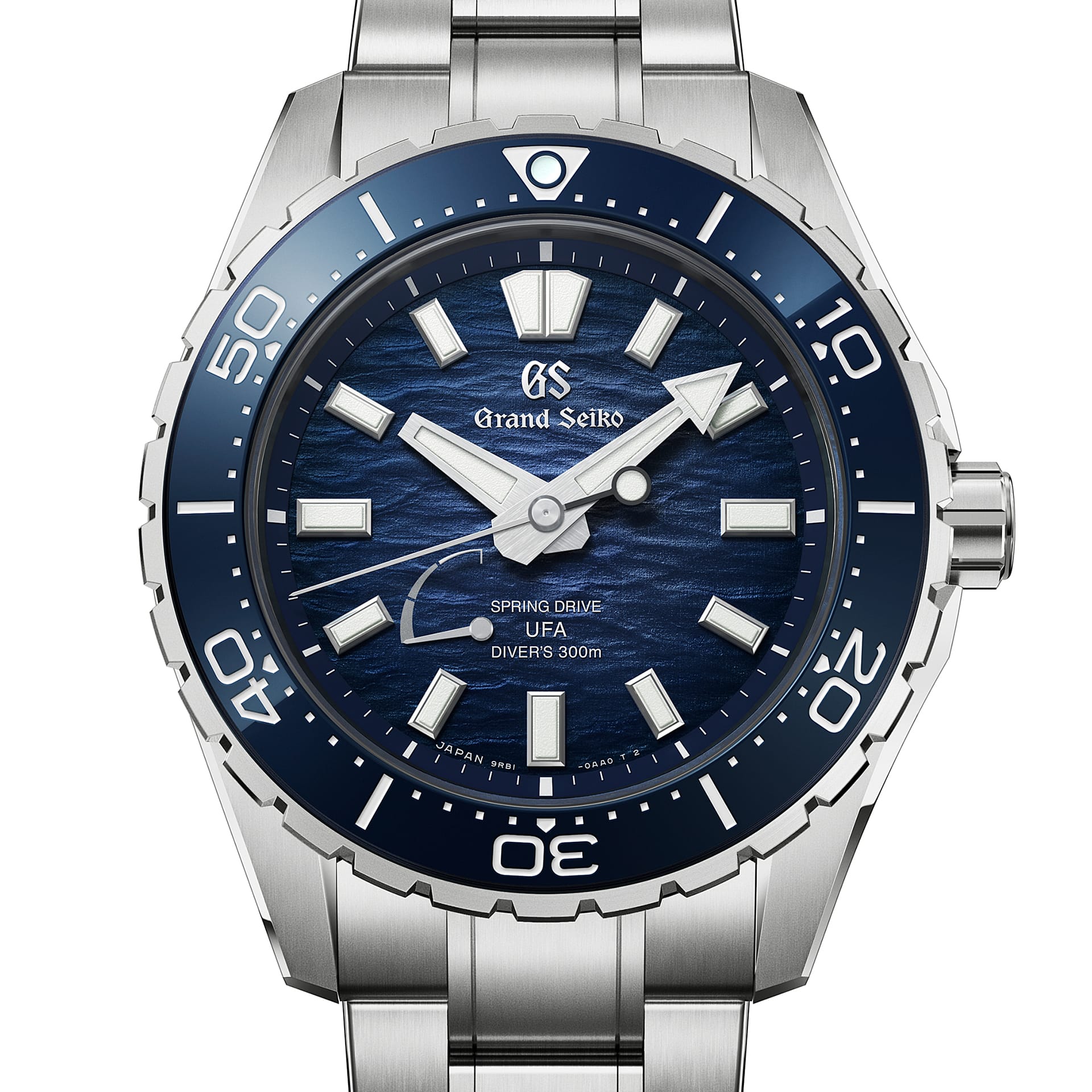
Grand Seiko Spring Drive U.F.A. Ushio 300 Diver. Photograph: Grand Seiko / GPHG.
Our choice: Grand Seiko Spring Drive U.F.A. Ushio 300 Diver
Grand Seiko won the official Sports prize. Our tool-watch choice comes down to how clearly it serves a purpose. The Ushio combines a dedicated timing bezel, prominent luminous indications and the 9RB1 Spring Drive movement. The manufacturer's emphasis on legibility and durability gives it a more direct tool brief than a sports watch judged principally by an adventurous case or prestigious complication. [6]
In the same official field, Laurent Ferrier’s Sport Traveller offers a persuasive travel-oriented alternative, and IWC’s Big Pilot’s Watch Perpetual Calendar Ceralume brings a very different combination of functions. The Ushio gets the editorial nod for concentrating on a recognisable job. Spring Drive uses electronic regulation with mainspring power; it should not be described as a conventional all-mechanical escapement. This award is a design-and-specification judgment, not a claim of independent dive testing.
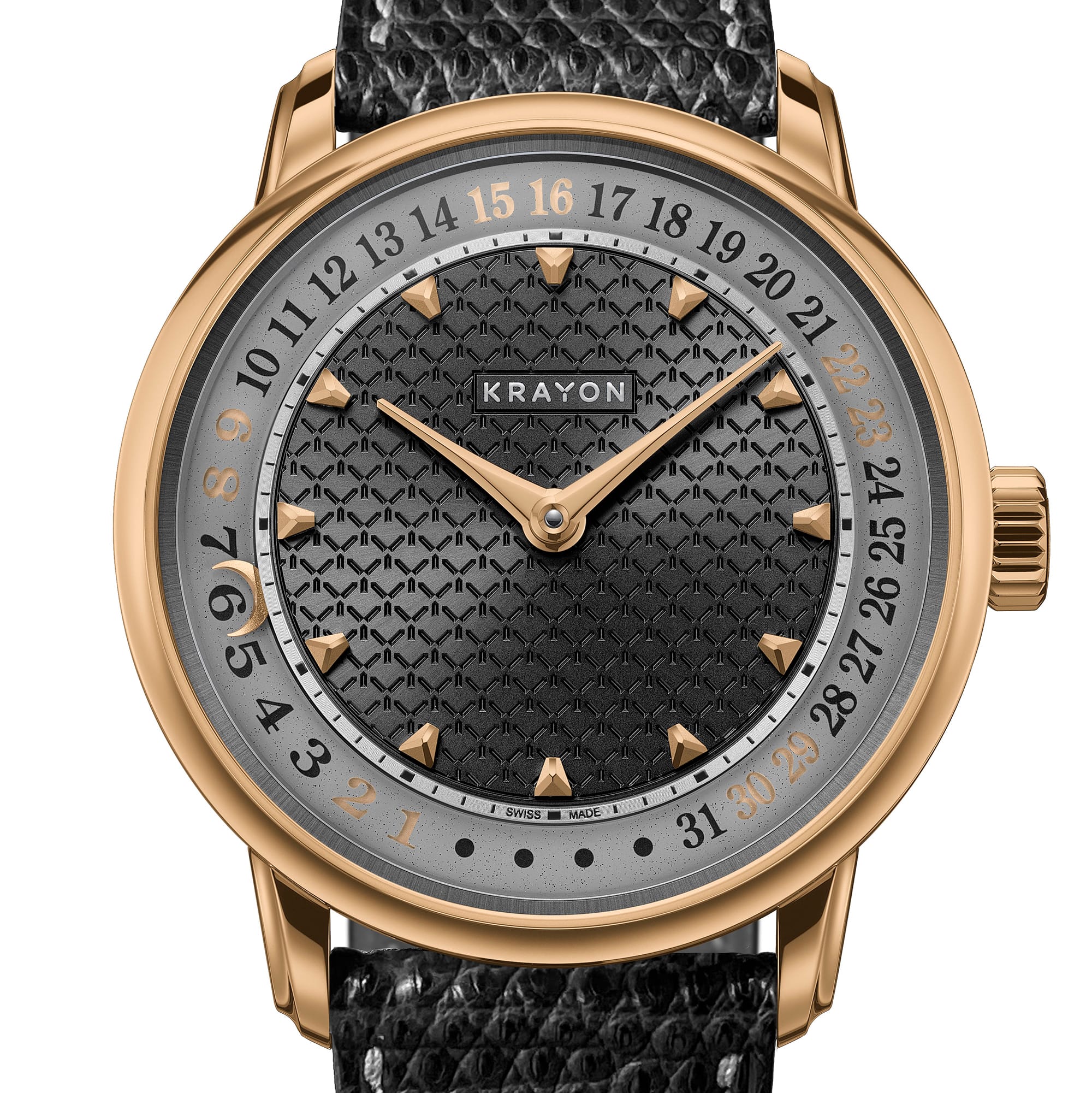
The Anyday is compelling because its complication changes what the wearer can learn from a glance. Its calendar lays out the month rather than merely revealing a date through a window. The rose-gold version is a new expression of an existing concept, not a newly invented mechanism for 2026. [7]
Berneron’s Quantième Annuel and Parmigiani’s Toric Perpetual Calendar are strong fellow finalists for collectors who want conventional calendar automation. The Anyday earns this editorial choice for information design: seeing the shape of the weeks has an everyday purpose. There is an important qualification. Its mechanism follows a 31-day month and needs correction after shorter months; it is not an annual or perpetual calendar. Utility here means a useful display, not fewer interventions. [8]
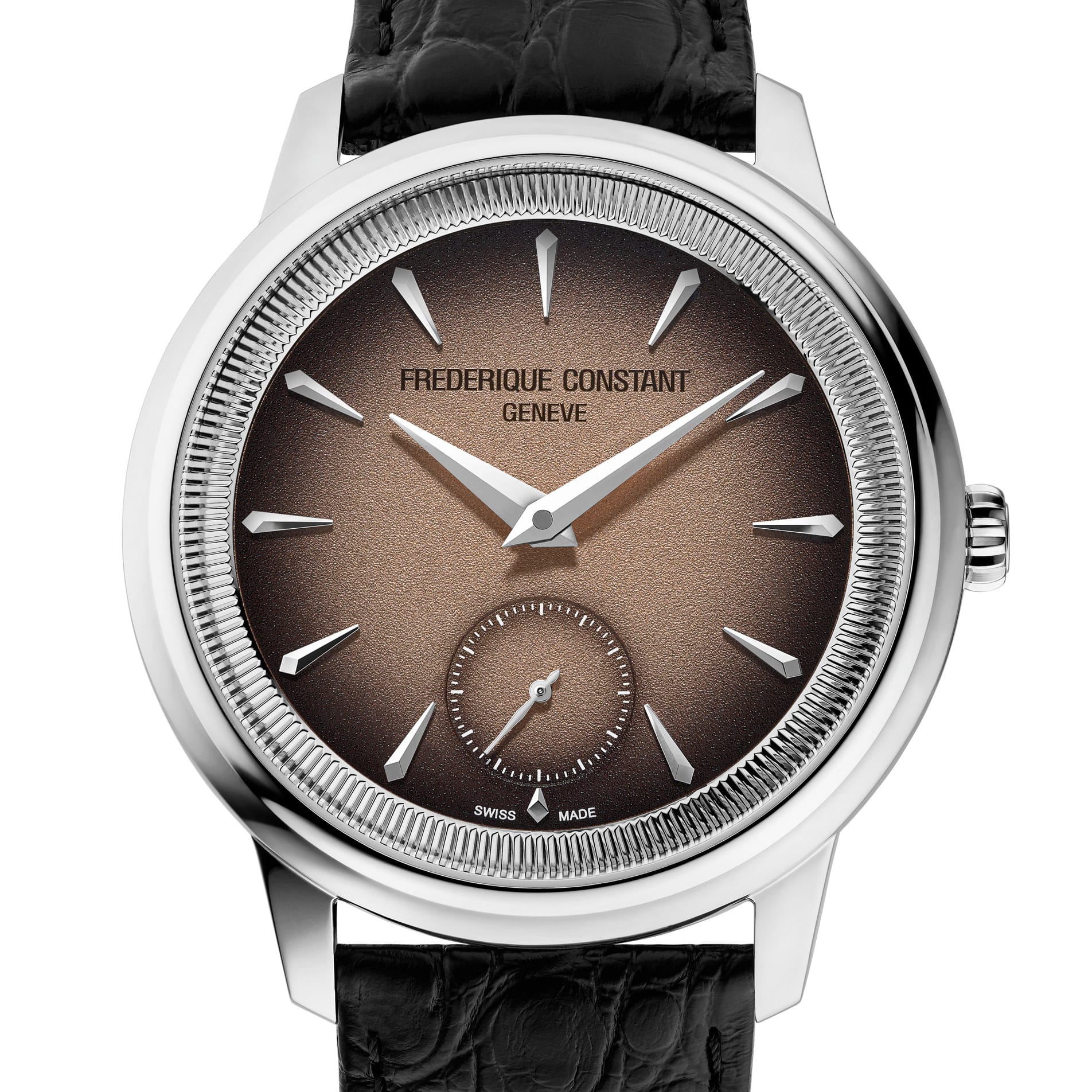
Value needs a reference point. This award recognises a relatively accessible, traditionally proportioned mechanical watch, rather than asserting that one watch offers the most craftsmanship per currency unit across the entire shortlist. For a concrete price reference, the brand’s US page lists blue-dial FC-435BBL3S6 at USD 2,595: a 38.5 mm case, La Joux-Perret manual-winding movement and 63-hour reserve. That reference was sold out when checked on November 8. The official GPHG register names the Moneta model without identifying that reference. [9]
The Seiko King Seiko VANAC is a fellow Challenge finalist for readers who prefer a different visual identity. Baltic and SpaceOne make the more experimental case with Seconde Majeure. The Moneta wins this narrower editorial award for bringing a small-seconds, hand-wound dress-watch experience into a lower price band. Calling it fully in-house would blur the brand’s own La Joux-Perret attribution.
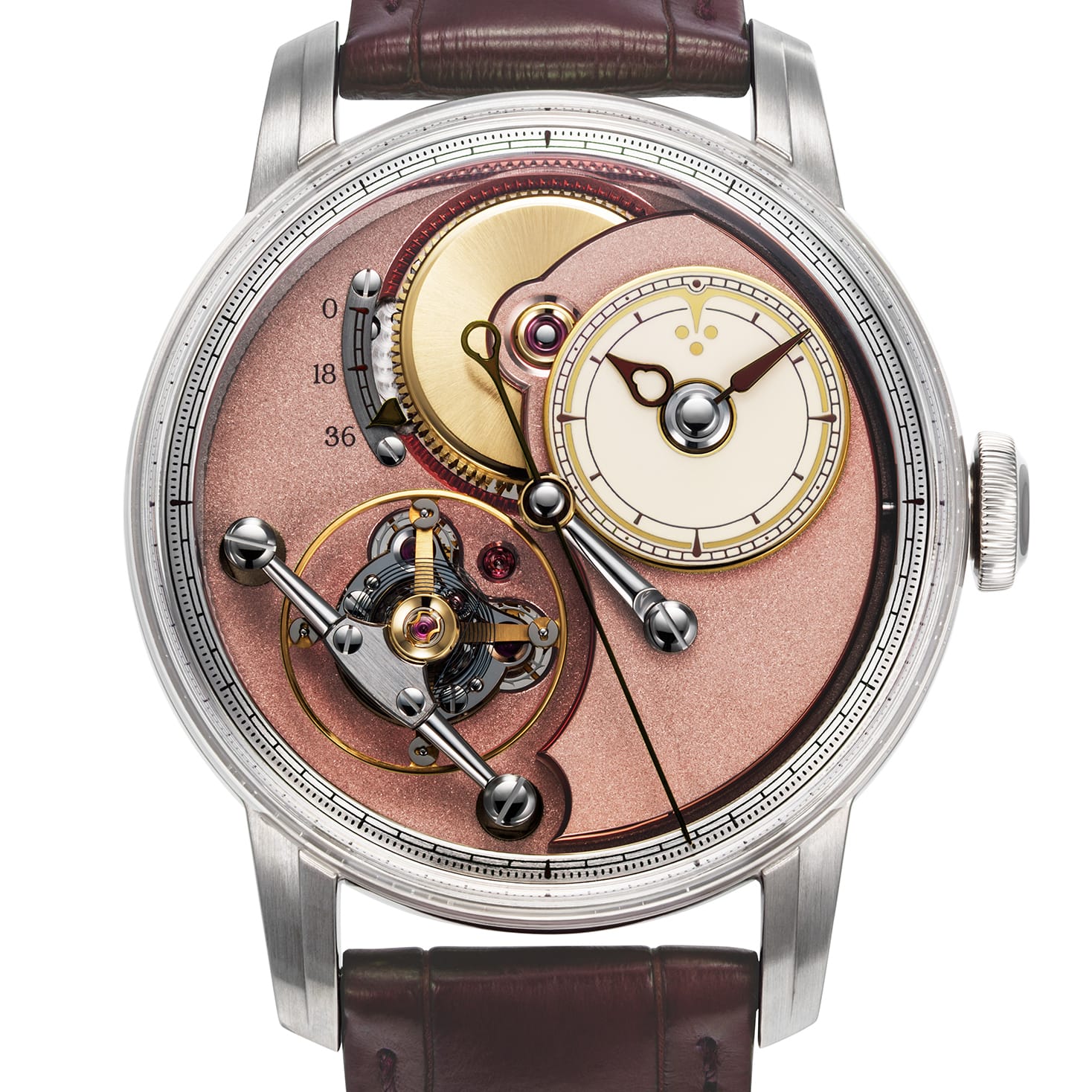
Cleguer is a verified debut, not merely a name unfamiliar to the editor. The manufacturer calls Inspiration One its inaugural timepiece. Its defining idea is the proprietary Innate escapement, developed to address the natural escapement’s self-starting problem. That gives the new brand a substantive mechanical proposition alongside its architectural presentation. [10]
Dominique Renaud’s Pulse60 is an instructive comparison within Complication: a very different proposal around the regulating organ, from an established figure in watchmaking. Cleguer earns the debut award for putting a specific technical question at the centre of its first watch. The manufacturer's claims should remain attributed, and novelty should not be confused with proven long-term service experience. This is a promising first chapter, not a declaration that an untested new architecture is superior to every established escapement.
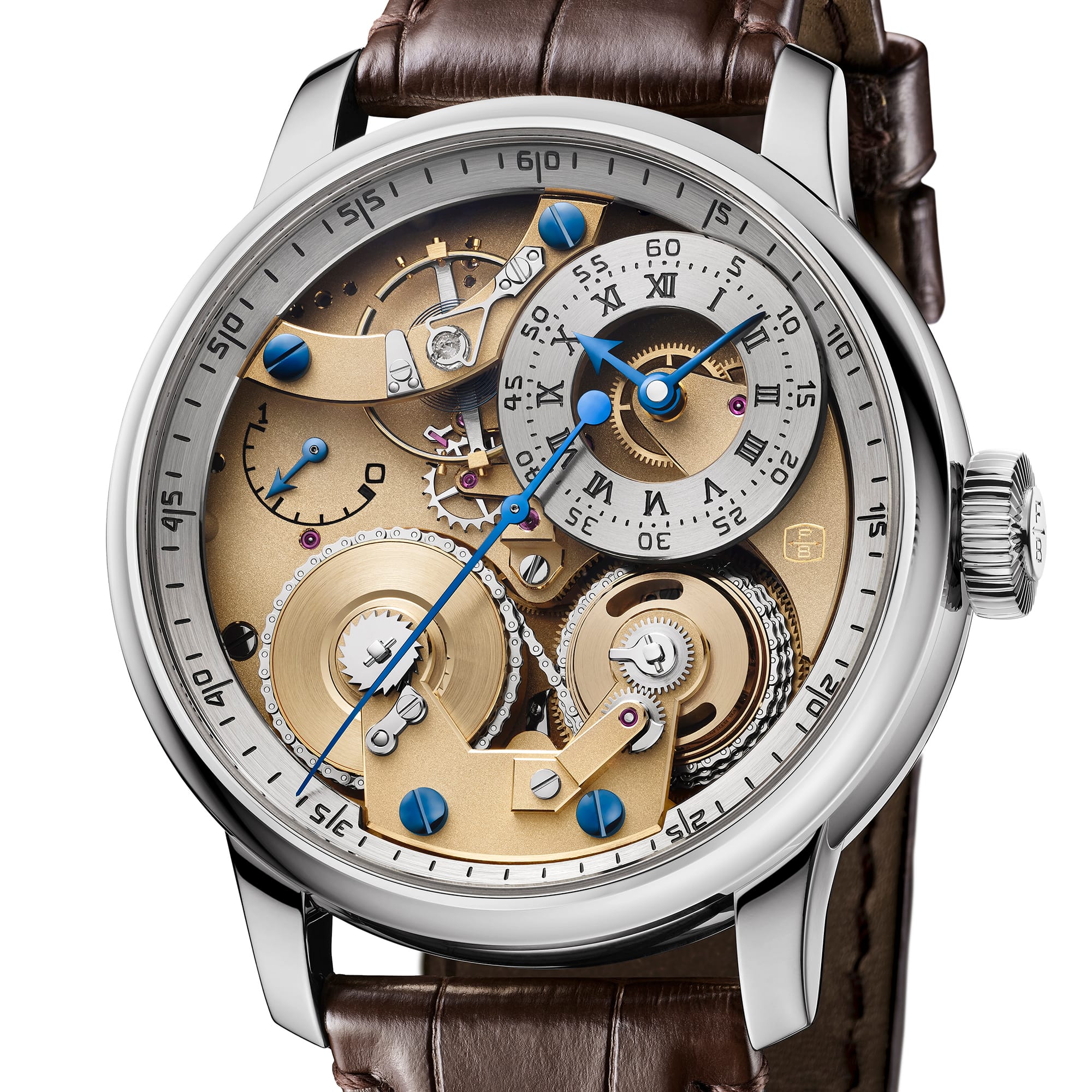
Our choice: Ferdinand Berthoud Naissance d’une Montre 3
Naissance d’une Montre 3 makes the strongest case here for judging a watch by how knowledge survives through its making. Ferdinand Berthoud describes traditional tools without digital assistance, COSC certification and a six-year project. Its fusee-and-chain transmission and bimetallic balance place historical construction at the centre of the object rather than merely quoting a period dial. [11]
Blancpain’s Grande Double Sonnerie and Chopard’s L.U.C Grand Strike are fellow Mechanical Exception finalists with a different kind of mechanical ambition. This award intentionally asks another question: which project most clearly keeps demanding workshop skills in use? Berthoud is our answer. The historical interest is the preservation of methods under contemporary quality expectations, not the unsupported claim that older methods must always produce a better watch.
THE ESCAPEMENT / EDITORIAL CHOICE 07
7 Best continuity of a manufacture idea
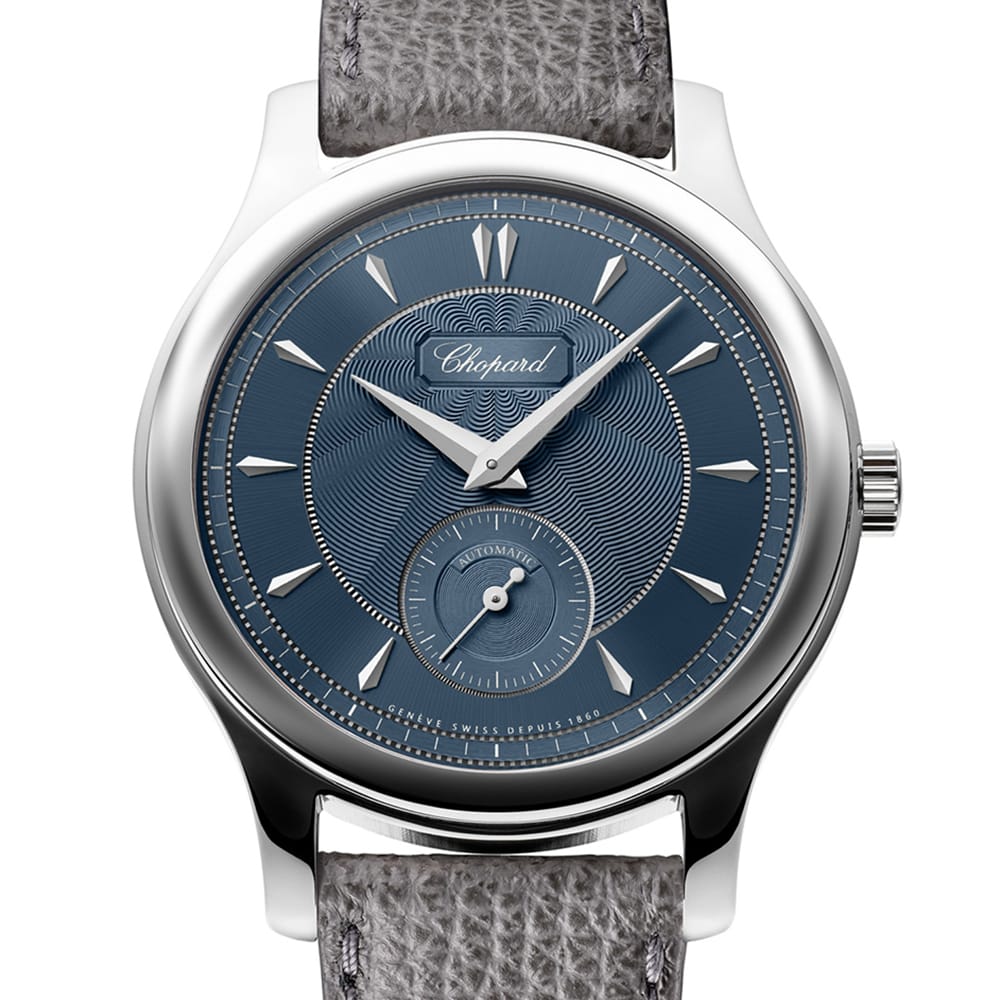
Chopard L.U.C 1860. Photograph: Chopard / GPHG.
Our choice: Chopard L.U.C 1860
Chopard’s L.U.C 1860 is a strong expression of the collector’s pleasure in continuity. The 2026 model brings a 36.5 mm Lucent Steel case, a hand-guilloché Areuse Blue dial, the L.U.C 96.40-L calibre, chronometer certification and the Poinçon de Genève. Chopard connects it to the founding L.U.C model and the thirtieth anniversary of its Fleurier manufacture. [12]
The Piaget Polo 79 Sodalite Watch offers a different historical proposition through a recognisable exterior identity. Hida’s Type8A pursues small-scale classical design without the same manufacture lineage. Chopard takes this award because case, dial and movement participate in a continuing argument about refined daily watchmaking. It is a more persuasive fit for an understated collection than an anniversary inscription alone.
THE ESCAPEMENT / EDITORIAL CHOICE 08
8 Best rethinking of the display
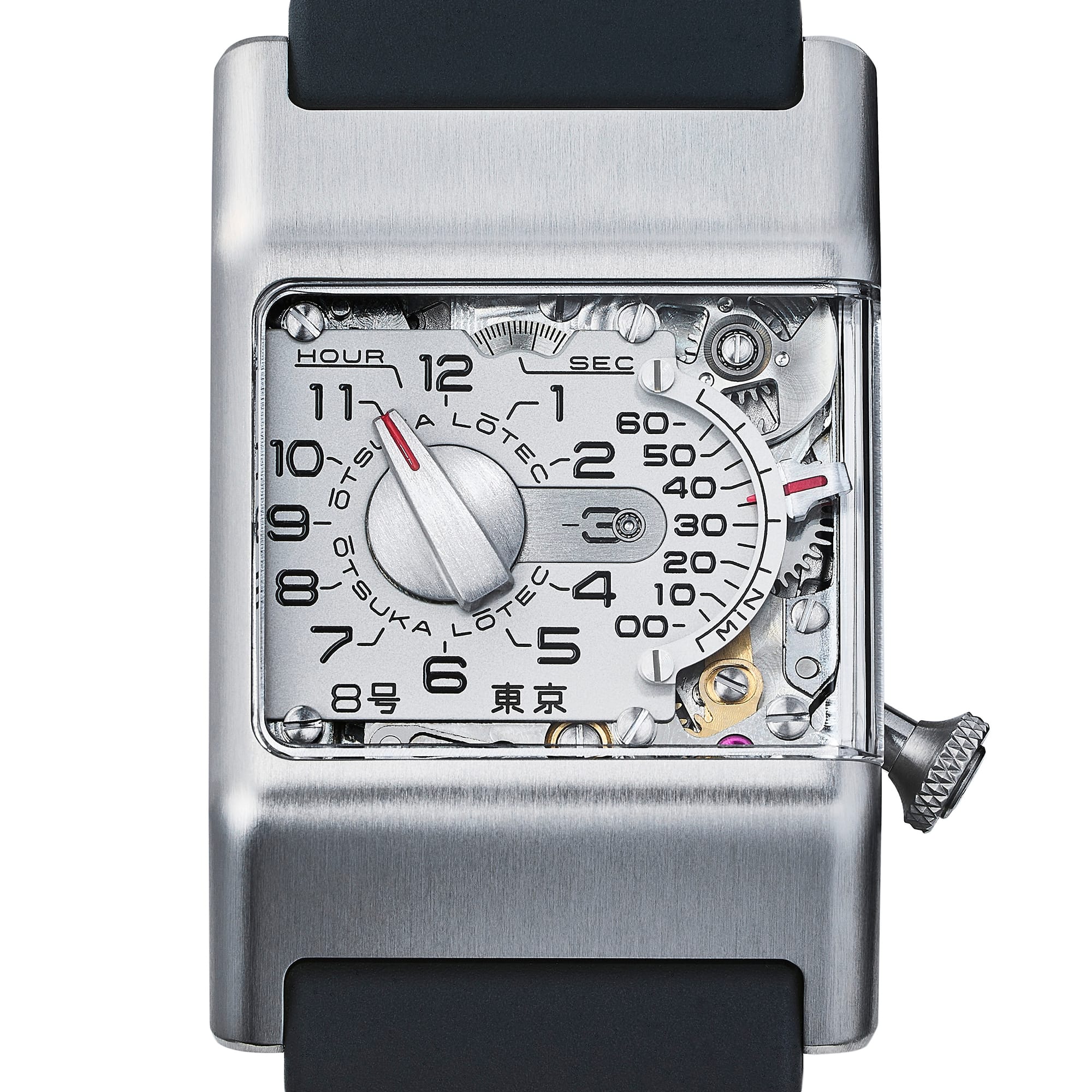
Otsuka Lotec No.8. Photograph: Masanori Yoshie; via GPHG.
Our choice: Otsuka Lotec No.8
The No.8 offers a particularly coherent industrial visual language. Its reported inspiration in the mixing consoles of Abbey Road Studios helps explain why the display feels closer to an instrument panel than a conventional dial. This is an editorial response to its documented design, not a claim to have tested its readability on the wrist. [13]
The Petite Aiguille field also includes Christopher Ward’s Loco Classic and the Ming and J.N. Shapiro 37.06 Lightning, while the Challenge category contains Baltic and SpaceOne’s very different treatment of time display. Otsuka Lotec gets this award because the instrument vocabulary appears to organise the whole watch rather than decorate it. A collector should still assess the learning curve and legibility in person. Originality has value, but it does not automatically make a display easier to use.
THE ESCAPEMENT / EDITORIAL CHOICE 09
9 Best collaborative watchmaking
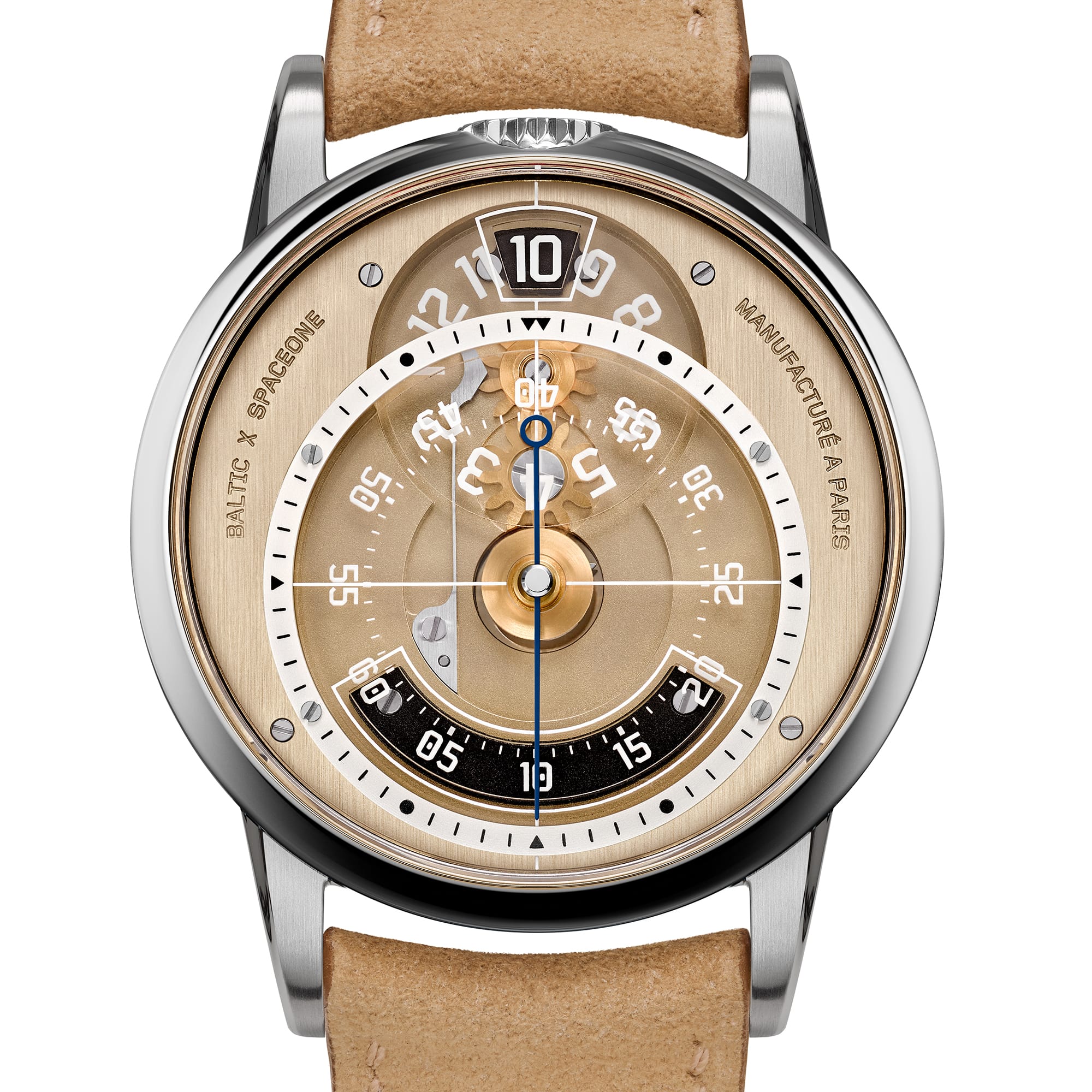
SpaceOne × Baltic Seconde Majeure. Photograph: Vincent Lions; via GPHG.
Our choice: Baltic and SpaceOne Seconde Majeure
The partnership is more interesting than two names on a dial. The manufacturer identifies a Théo Auffret jumping-hour module, supported by a maillechort plate that is both structural and visible. Hours and minutes are separated on sapphire discs while a large seconds hand provides movement across the face. The published specification is explicit about the Soprod P024 automatic base. [14]
The Ming and J.N. Shapiro finalist is another collaboration worth considering, and the Louis Vuitton and De Bethune clock partnership works at a very different scale. Seconde Majeure receives this editorial award for making the collaboration legible in the mechanism and presentation. Its credit should go to the actual contributors, without recasting a modular construction as a fully proprietary base calibre. Pre-orders were closed on the official site when checked, so this is not an immediately available shopping suggestion.
This is deliberately narrower than the official Chronograph prize. The editorial preference is for a chronograph that sits naturally beside restrained, mechanically serious dress watches. Coverage of the RRCHF describes a new flyback movement with an instantaneous minute counter, developed around settled case and dial proportions. An interview with Rexhepi provides a more useful account of that process than a claim that pedigree alone establishes quality. [15]
Audemars Piguet’s Royal Oak RD#5 brings a formidable alternative for a collector drawn to the integrated-bracelet language. Parmigiani’s Tonda PF Chronographe Mystérieux represents another approach to visual restraint. Rexhepi takes our award because the classical presentation and dedicated chronograph project fit this edition’s collecting priorities. Finishing and pusher feel are still things we would want to experience in person.
04 / GPHG SPECIAL
What changed from 2025
Breguet’s Classique Souscription 2025 won last year’s Aiguille d’Or. Its success is a useful reminder that GPHG’s highest distinction need not go to the watch with the greatest number of indications. In the 2025 results, Daniel Roth won Time Only, Urban Jürgensen won Men’s Watch, Zenith received Chronometry, and Chopard received both Sports and Ladies’ Complication. [16]
Several of those names remain pertinent in 2026, but the models and categories have changed. Daniel Roth’s Extra Plat Rose Gold Skeleton is an Essential finalist, rather than the same watch that won Time Only. Chopard returns across a broad range of categories. Audemars Piguet, Bovet, Bvlgari, Dior and L’Épée also appear in both the 2025 winner list and the 2026 finalist register. This is a verified year-to-year comparison, not a claim that any of them returned after an absence.
The 2025 shortlist had 90 timepieces in 15 categories, against 84 in 14 this year. It is therefore misleading to treat the smaller shortlist alone as evidence of waning participation. Published entry totals rose from 302 models by 184 brands in 2025 to 320 models by 194 brands in 2026. The restructured awards also make a direct category-by-category performance table less meaningful. [3,17]
05 / GPHG SPECIAL
New names and meaningful absences
Cleguer qualifies for a debut discussion because its own materials identify Inspiration One as its inaugural watch. The available evidence does not establish every finalist brand’s first-ever GPHG appearance. No comprehensive newcomer list is claimed here.
Breguet is absent after its 2025 Aiguille d’Or; published 2026 coverage attributes this to the rule excluding the previous year’s top-prize winner from competing. That is different from a voluntary boycott. Rolex, Patek Philippe, Cartier and Vacheron Constantin do not appear in the 2026 finalist register. Their absence from that register alone cannot explain whether they submitted an entry, declined to enter, or were not selected. Any stronger claim needs the full entry list and relevant brand or GPHG evidence. [18]
The award field is a selected competition, not a census of all important watchmaking. A watch outside it can still matter deeply to a collector. There is plenty of important watchmaking beyond this shortlist.
06 / GPHG SPECIAL
Finalist register
The following register records nomination, not rank or predicted outcome. Model names are cross-checked against published finalist lists; the official awards are listed separately above. [2–4,19]
Time Only: Bvlgari Octo Finissimo 37 Satin-Polished Titanium; Chopard L.U.C 1860; Laurent Ferrier Classic Origin Beige; Naoya Hida and Co NH Type8A; Parmigiani Fleurier Toric Petite Seconde; Piaget Polo 79 Sodalite Watch.
Essential: Audemars Piguet Neo Frame Jumping Hour; Daniel Roth Extra Plat Rose Gold Skeleton; Grand Seiko Hand-engraved Manual-winding Spring Drive; MB&F SP One Platinum; Parmigiani Fleurier Tonda PF Minute Rattrapante Arctic Rose; Stéphane Pierre L’Impétrant.
Complication: Cleguer Inspiration One; Czapek Time Jumper; Dominique Renaud Pulse60 Titanium Black; Lederer CIC 39 InVerto Titanium; Ulysse Nardin and Urwerk UR-FREAK; Behrens and Vianney Halter KWH.
Mechanical Exception: Blancpain Grande Double Sonnerie; Chopard L.U.C Grand Strike; Christiaan van der Klaauw CVDK Grand Planetarium Eccentric Silicium; Ferdinand Berthoud Naissance d’une Montre 3; H. Moser and Cie Endeavour Minute Repeater Cylindrical Tourbillon Skeleton Cosmic Rain; Konstantin Chaykin ThinKing Mystery.
Gemset: Bovet 1822 Récital 23; Bvlgari Serpenti Aeterna; Chopard L’Heure du Diamant; Franck Muller Round Triple Mystery Skeleton; Piaget Swinging Pebble; Tiffany and Co Paradise Bird Toucan.
Tourbillon: Arnold and Son Constant Force Tourbillon 11 Platinum; David Candaux DC6 Night Forest; Ferdinand Berthoud Chronomètre FB 2TV; Girard-Perregaux Laureato Fifty Three Gold Bridges; Louis Vuitton Escale Worldtime Flying Tourbillon; Sylvain Pinaud 30s Tourbillon.
Chronograph: Audemars Piguet Royal Oak Jumbo Extra-thin Selfwinding Flying Tourbillon Chronograph RD#5 150th Anniversary; H. Moser and Cie Endeavour Flyback Chronograph Dual Time Date; Louis Moinet 1816 Chronograph; Parmigiani Fleurier Tonda PF Chronographe Mystérieux; Rexhep Rexhepi Chronograph Flyback; TAG Heuer Monaco Evergraph.
Calendar and Astronomy: Audemars Piguet 150 Heritage; Berneron Quantième Annuel; Bovet 1822 Récital 31; Christiaan van der Klaauw CVDK Venus Annual Calendar; Krayon Anyday Rose Gold; Parmigiani Fleurier Toric Perpetual Calendar 30th Anniversary.
Sports: Chopard Zagato Lab One Concept; Grand Seiko Spring Drive U.F.A. Ushio 300 Diver; H. Moser and Cie Streamliner Pump; Hermès H08 Squelette; IWC Schaffhausen Big Pilot’s Watch Perpetual Calendar Ceralume; Laurent Ferrier Sport Traveller Slate Grey.
Jewellery: Bvlgari Tubogas Manchette; Chopard Mystery Nut; Dior Montres Dior Grand Bal Nuit des Indes; Franck Muller Vanguard Curvex Cut Flower; Jacob and Co Billionaire Double Tourbillon Angel-Cut Diamonds; Piaget Flowing Curves Cuff Watch.
Petite Aiguille: Christopher Ward Loco Classic; Frédérique Constant Classic Worldtimer Manufacture; Massena LAB Noctograph by Massena LAB and Raúl Pagès; Ming and J.N. Shapiro 37.06 Lightning; Otsuka Lotec No.8; TAG Heuer Monaco Chronograph.
Challenge: Beaubleu La Pièce No.2; Beda’a Angles Guichets; Favre Leuba Chief Skeleton; Frédérique Constant Classics Moneta Handwinding; Seiko King Seiko VANAC; SpaceOne and Baltic Seconde Majeure.
Mechanical Clock: Carl Suchy and Söhne Table Waltz Tourbillon Mirror Edition; Chopard The Beehive Chiming Table Clock; L’Épée 1839 The Gekko; La Vallée Cosmo; Louis Vuitton and De Bethune LVDB-03 Sympathique Louis Varius; Miki Eleta Frog Queen.